TaxTrack guide · Updated September 24, 2026
I moved out of South Carolina. Do I still have to deal with my old business?
Short answer: Yes. Moving does not make old South Carolina filing obligations or tax disappear. What matters is when the business stopped operating in South Carolina and when the South Carolina company was formally closed, and a return that was never filed can still be assessed years later (SC Code 12-54-85).
Sorting this out starts with three dates, and once you have them the picture usually gets much clearer.
The three dates that matter
- When you personally moved. This affects your own residency, not the company's obligations.
- When the business stopped operating in South Carolina. Profit usually stops here, but filing requirements do not automatically stop.
- When the South Carolina company was formally closed or dissolved. Until then it can still owe yearly returns and license fees, even with no activity.
A business that moved to another state can also keep South Carolina obligations if it still has property, employees, representatives or sales here. SCDOR describes this as nexus.
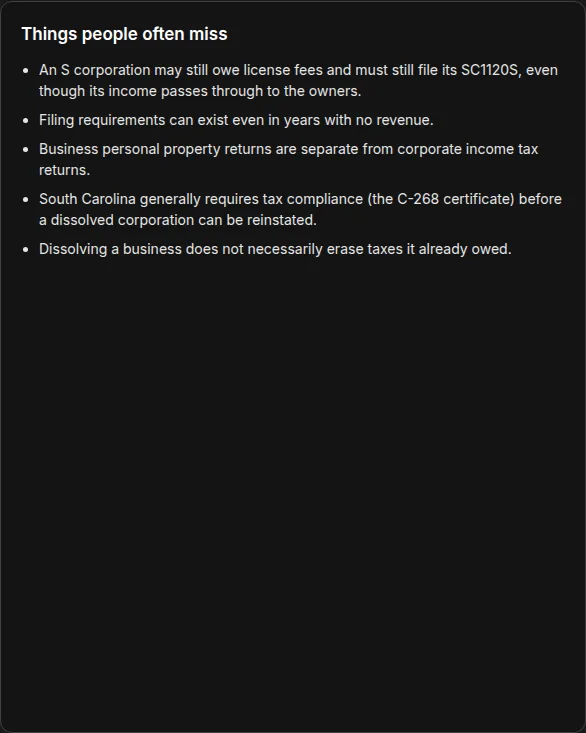
Old years do not simply expire
South Carolina normally has 36 months from the filing date to assess tax. That limit does not apply when a required return was never filed (SC Code 12-54-85). There is a separate 10-year limit on collection, but it runs from when the tax is assessed, not from when the return was due, and it can be extended or suspended.
Once there is an unpaid assessment, unpaid tax is a lien on property (SC Code 12-54-120), and SCDOR says it can levy wages and bank or investment accounts. Property left in South Carolina stays exposed.
What to do next
- Find out which returns were actually required, based on the three dates above.
- Ask SCDOR whether it has already issued estimated assessments.
- If the company should be closed, closing it formally stops new years from piling up.
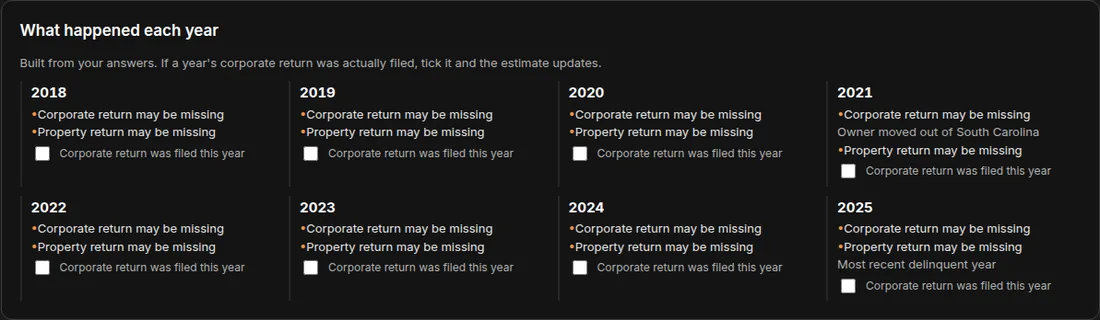
Run your own numbers, free
Answer what you know and TaxTrack estimates the rest: taxes, penalties, property tax, the owner side of an S corporation, and the steps back to good standing. Sign in with just your email.
Start the free checkupCommon questions
Does an old unfiled return expire after 3 or 10 years?
Not automatically. The 36-month assessment limit does not apply when a required return was never filed, and the 10-year collection limit runs from the assessment date, not the due date (SC Code 12-54-85).
Can SCDOR collect if I live in another state now?
SCDOR says it can levy wages and bank or investment accounts once there is an unpaid assessment or tax lien, and a South Carolina lien attaches to property in South Carolina.
Can a business based in another state owe South Carolina returns?
Yes, if it keeps property, employees, representatives or sales in South Carolina. SCDOR calls this nexus.
Sources
- SC Code of Laws Title 12, Chapter 54 (12-54-85 limits, 12-54-120 liens)
- SCDOR: Nexus
- SCDOR: Liens
- SCDOR: Levies on Wages or Intangible Assets
- SCDOR: Notices & Compliance
Sources checked September 24, 2026.
Not tax, legal or accounting advice. TaxTrack by ExpenseTrack gives estimates for general information and planning only. It estimates and organizes; it does not prepare or file returns. Actual tax, penalties, interest and reinstatement requirements are determined by the South Carolina Department of Revenue, county offices and the Secretary of State. Talk to a qualified CPA, enrolled agent or tax attorney about your situation.