TaxTrack guide · Updated September 24, 2026
The South Carolina corporate license fee
Short answer: The South Carolina corporate license fee is 0.1% of capital stock and paid-in surplus plus $15, with a minimum of $25 a year. It is owed for each year the corporation exists, so every delinquent year carries its own fee, even years with no activity.
This is usually the smallest line in a cleanup, and it is also the easiest one to calculate exactly once you find one number on the balance sheet.
The formula
Capital stock + paid-in surplus x 0.1% + $15, minimum $25
| Capital stock + paid-in surplus | Yearly fee |
|---|---|
| $1,000 | $25 (minimum) |
| $10,000 | $25 |
| $100,000 | $115 |
| $250,000 | $265 |
Where to find the number
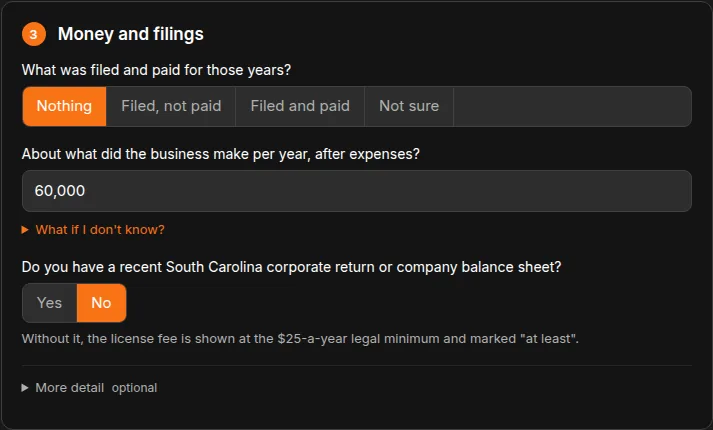
Capital stock and paid-in surplus appear in the equity section of the balance sheet: what the owners put in for their shares, plus any extra they paid in. They also appear on prior South Carolina corporate returns. If you cannot find them, TaxTrack uses the $25 minimum and marks the figure as "at least".
S corporations owe the license fee too, even though their income passes through to the owners.
Run your own numbers, free
Answer what you know and TaxTrack estimates the rest: taxes, penalties, property tax, the owner side of an S corporation, and the steps back to good standing. Sign in with just your email.
Start the free checkupCommon questions
What is the minimum corporate license fee in South Carolina?
$25 a year.
Does an inactive corporation still owe the license fee?
It is owed for each year the corporation exists, so years with no activity can still carry a fee until the corporation is formally dissolved.
Do S corporations pay the license fee?
Yes. The license fee applies to S corporations as well.
Sources
Sources checked September 24, 2026.
Not tax, legal or accounting advice. TaxTrack by ExpenseTrack gives estimates for general information and planning only. It estimates and organizes; it does not prepare or file returns. Actual tax, penalties, interest and reinstatement requirements are determined by the South Carolina Department of Revenue, county offices and the Secretary of State. Talk to a qualified CPA, enrolled agent or tax attorney about your situation.